


Login
Log in if you have an account
Register
By creating an account with our store, you will be able to move through the checkout process faster, store multiple addresses, view and track your orders in your account, and more.
Create an account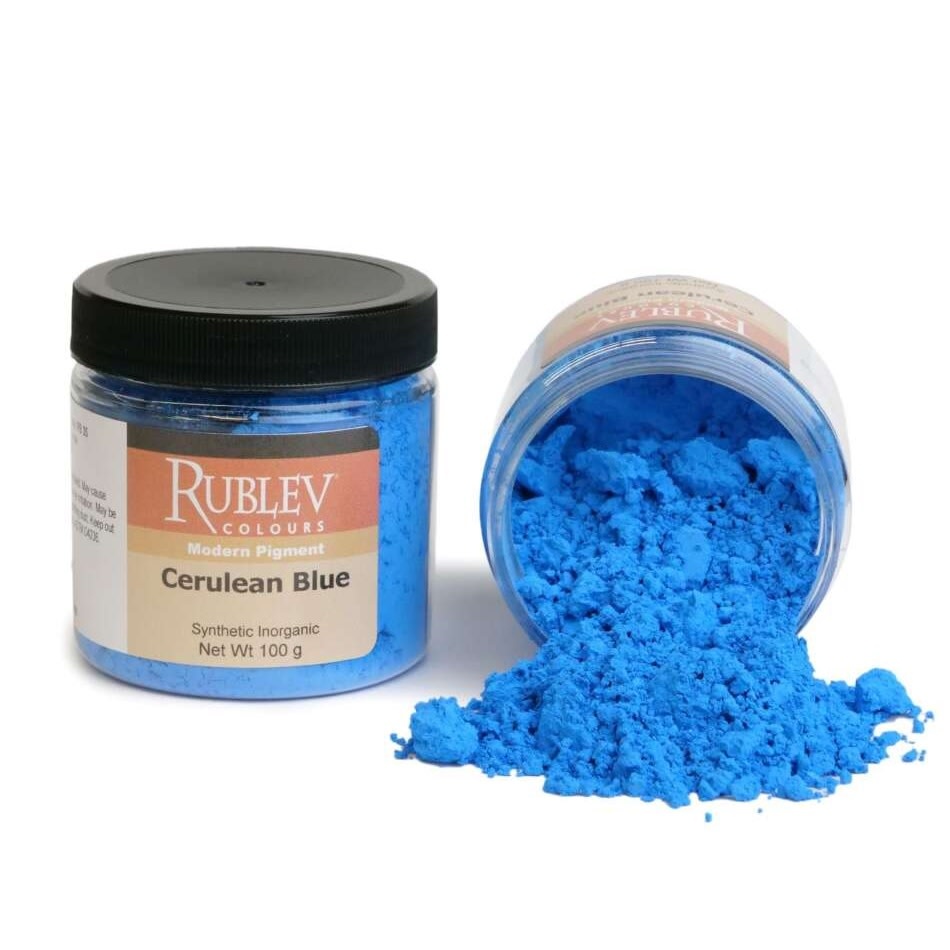
Water-Based Paint
In most water-based paints, Cerulean blue is a semi-transparent pigment with moderate tinting strength. When it dries, it appears lighter and less saturated. Although pigment particles are very fine, they flocculate, giving a grainy appearance in watercolor. Differences in how the pigment is ground and mixed result in significant differences in its performance.
Oil-Based Paint
In oil-based paint, Cerulean blue is a semi-transparent pigment with moderate tinting strength. Differences in how the pigment is ground and mixed can result in significant variations in its appearance.
Oil Absorption and Grinding
Cerulean blue absorbs a moderately high amount of oil, about 55 grams of linseed oil per 100 grams of pigment, to make a paste. Some manuals note that the pigment works better as a watercolor than in oil and is highly valued on that account among artists’ moist colors. Grinding it artists’ use in oil will require 35 percent dry pigment to 65 percent by weight of poppy seed or walnut oil, either of which is preferred by some artists to linseed oil. Cerulean blue has a neutral blue hue that, under incandescent light, appears more or less greenish-blue.
Physical Properties
While not formally published as a Mohs-tested mineral, cerulean blue (cobalt stannate) is best characterized as having a Mohs hardness of approximately 6–7, aligning with its oxide crystal structure and observed abrasiveness in pigment processing. Mohs hardness is formally defined for bulk crystalline minerals, not finely ground pigment powders. As a result:
-
Pigment handbooks typically report oil absorption, density, refractive index, and tinting strength, but not hardness.
-
Hardness values are instead inferred from Tin dioxide (SnO₂, cassiterite), Mohs 6–7, and Cobalt oxides: generally ~5–6.
-
The resulting mixed oxide falls squarely in the upper mid-hardness range.
Practical Implications for Artists’ Materials
-
Grinding & Milling: Cerulean blue is relatively abrasive, comparable to ultramarine and many cobalt pigments, and noticeably harder than earth pigments.
-
Tool Wear: Extended use can accelerate wear on steel palette knives, muller plates, and milling equipment.
-
Paint Film Behavior: The hardness contributes to its granular texture, moderate tinting strength, and excellent durability.
-
Conservation Context: Its chemical and physical stability are consistent with its long record of permanence.
Toxicity
Cerulean blue is not considered toxic; however, care should be taken in handling the dry powder pigment to avoid inhaling the dust. All toxicological studies showed no signs of toxicity to humans or the environment.
In animal studies, cobalt blue pigments showed no acute toxicity. No acute irritant effect was observed in tests assessing acute skin and mucous membrane irritation. In studies on rats to assess carcinogenic potential, no statistically significant results were observed. Soluble cobalt compounds and cobalt metal may have a sensitizing effect. However, none have been reported during many years of handling cobalt blue pigments.
Add your review
Review Rublev Colours Pigment Cerulean Blue - 100 g