


Login
Log in if you have an account
Register
By creating an account with our store, you will be able to move through the checkout process faster, store multiple addresses, view and track your orders in your account, and more.
Create an account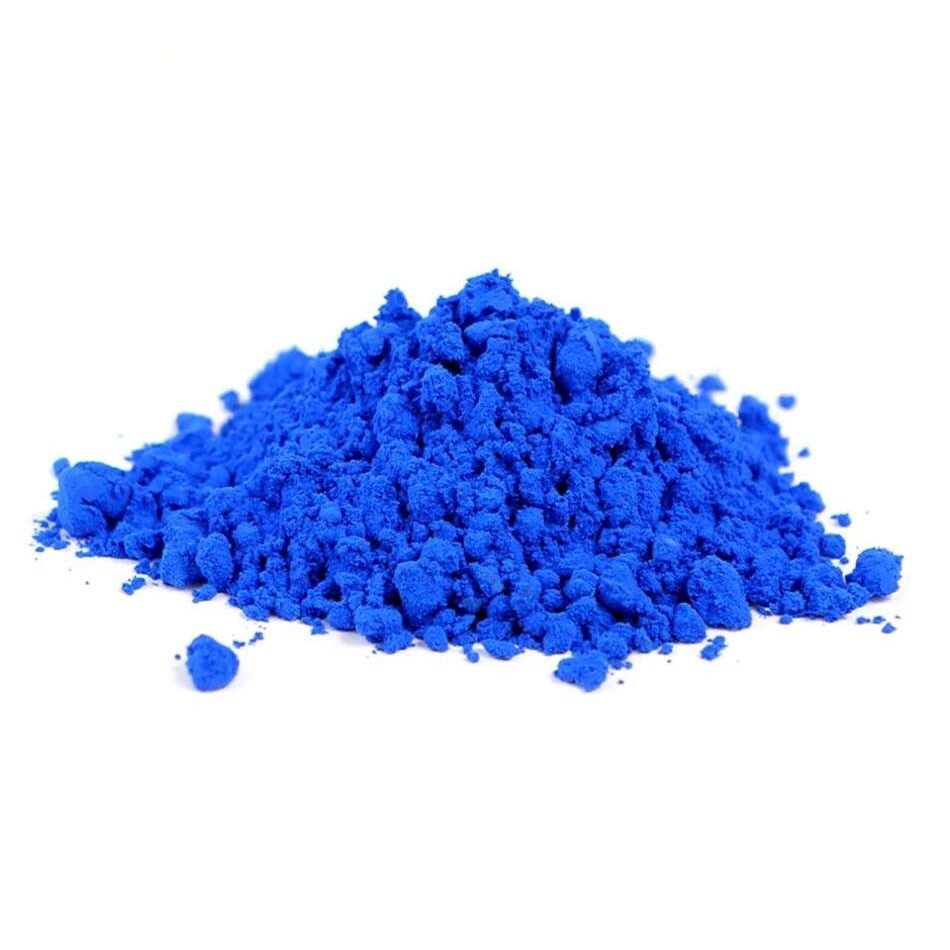
Being a glass, smalt is transparent. Its particles are vitreous, meaning that they have highly reflective surfaces. As smalt particles are ground finer, their surfaces are broken and fractured, increasing light scattering and lowering color saturation. For this reason, smalt cannot be ground as finely as many other pigments, so it must be used rather coarsely in paint.
Due to its low refractive index, smalt appears more opaque when used in water-borne media and in lime (fresco). In oil media, a dull color may be obtained because smalt’s refractive index is close to that of dried oil.
Smalt is known to fade in paintings, but the degree to which this occurs varies even within the same painting. The reason for the fading has only been understood quite recently. Some assumed that the fading resulted from the leaching of cobalt. However, Professor Jaap J. Boon and his collaborators recently found that the potassium concentration is crucial to fading. The color does not fade when the potassium-to-cobalt ratio is 1:1 or higher.
Potassium is strongly alkaline, and its findings suggest a certain alkalinity level is required to maintain smalt’s blue color. Drying oil creates a slightly acidic environment. The small proportion of fatty acids in the oil may react with the potassium. Moisture must be present for this reaction to occur, but potassium attracts moisture, and there will be occasions when the air’s moisture content is likely to be high.
The conclusion is that smalt made with a higher proportion of potassium to cobalt will not fade. Rublev Colours Smalt and Royal Smalt have a potassium-to-cobalt ratio of 2.09:1.00.
To further protect against discoloration and enhance its color, it is best mixed with lead white. The tradition was to sprinkle the smalt over a fresh coat of paint to prevent discoloration, then dust off the excess pigment. Smalt exerts a powerful siccative effect on oils and was often used solely for this purpose.
Oil Absorption and Grinding
Smalt absorbs a moderate amount of oil (25 g of oil per 100 g of pigment). The pigment is refractory and difficult to wet, making it difficult to mix with oil into a smooth paste. Adding a small amount of bleached beeswax or aluminum stearate to the oil is best before mixing it with smalt. Allowing the oil-and-pigment mixture to “sweat” or stand overnight before further grinding with a muller often helps.
Toxicity
Smalt contains cobalt, which can be toxic if inhaled or ingested. Therefore, care should be taken when handling the dry-powder pigment to avoid inhaling dust.
Add your review
Review Rublev Colours Pigment Smalt - 10 g