Login
Log in if you have an account
Register
By creating an account with our store, you will be able to move through the checkout process faster, store multiple addresses, view and track your orders in your account, and more.
Create an account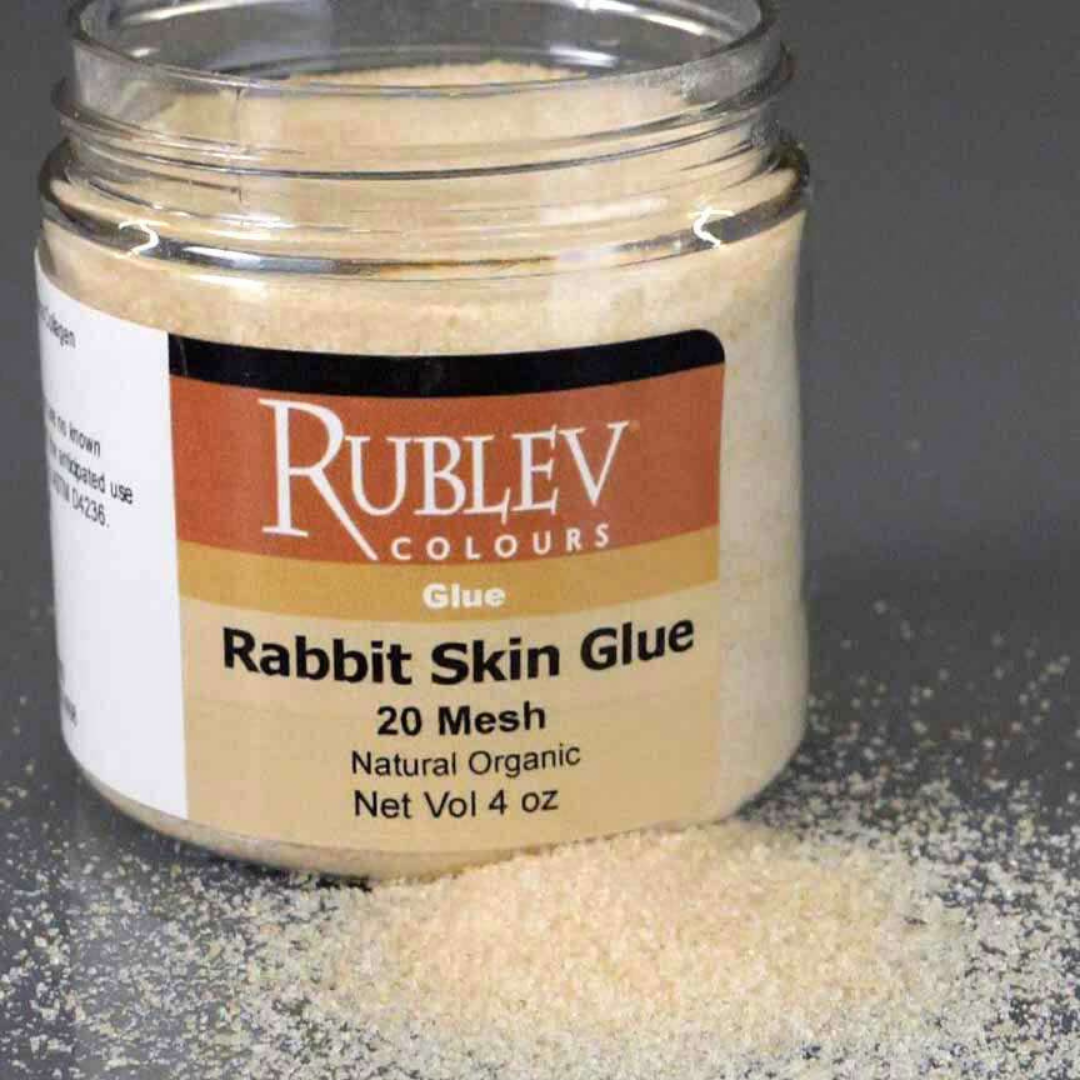
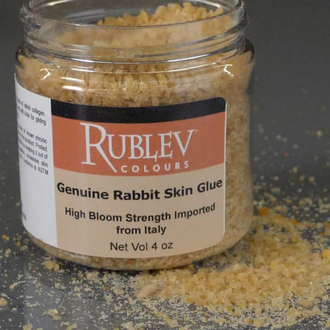
Stronger than most modern adhesives, rabbit skin glue is used in traditional woodworking, gilding, and painting techniques. First soaked in water and then heated in a water bath, it is applied warm, and gels when left to cool. In woodworking, rabbit skin glue’s solubility in water makes it reversible, while its “open time” allows for repositioning. In painting and gilding techniques, it is used as a size for canvas and boards, in recipes to make traditional gesso, and in distemper paints.
Animal glues vary in strength, but rabbit skin glue usually offers the highest strength, viscosity, and elasticity. Genuine rabbit skin glue tends to gel at lower temperatures, making it easier to use in gesso applications. Otherwise, glue made from bovine collagen is comparable.
Always make the minimum concentration required; as a guide, a set jelly should be somewhere between hard set and liquid. For a canvas or panel size, try 40 to 70 grams of rabbit skin glue for every quart of water. For distemper paints, 60 to 100 grams for every quart. As an adhesive, check the consistency by dipping a piece of wood into the glue pot. If the glue runs off smoothly, you’ve got it right. If it is too thick, add a little water. Use the glue hot.
Add your review
Review Rublev Colours Rabbit Skin Glue