
Login
Log in if you have an account
Register
By creating an account with our store, you will be able to move through the checkout process faster, store multiple addresses, view and track your orders in your account, and more.
Create an account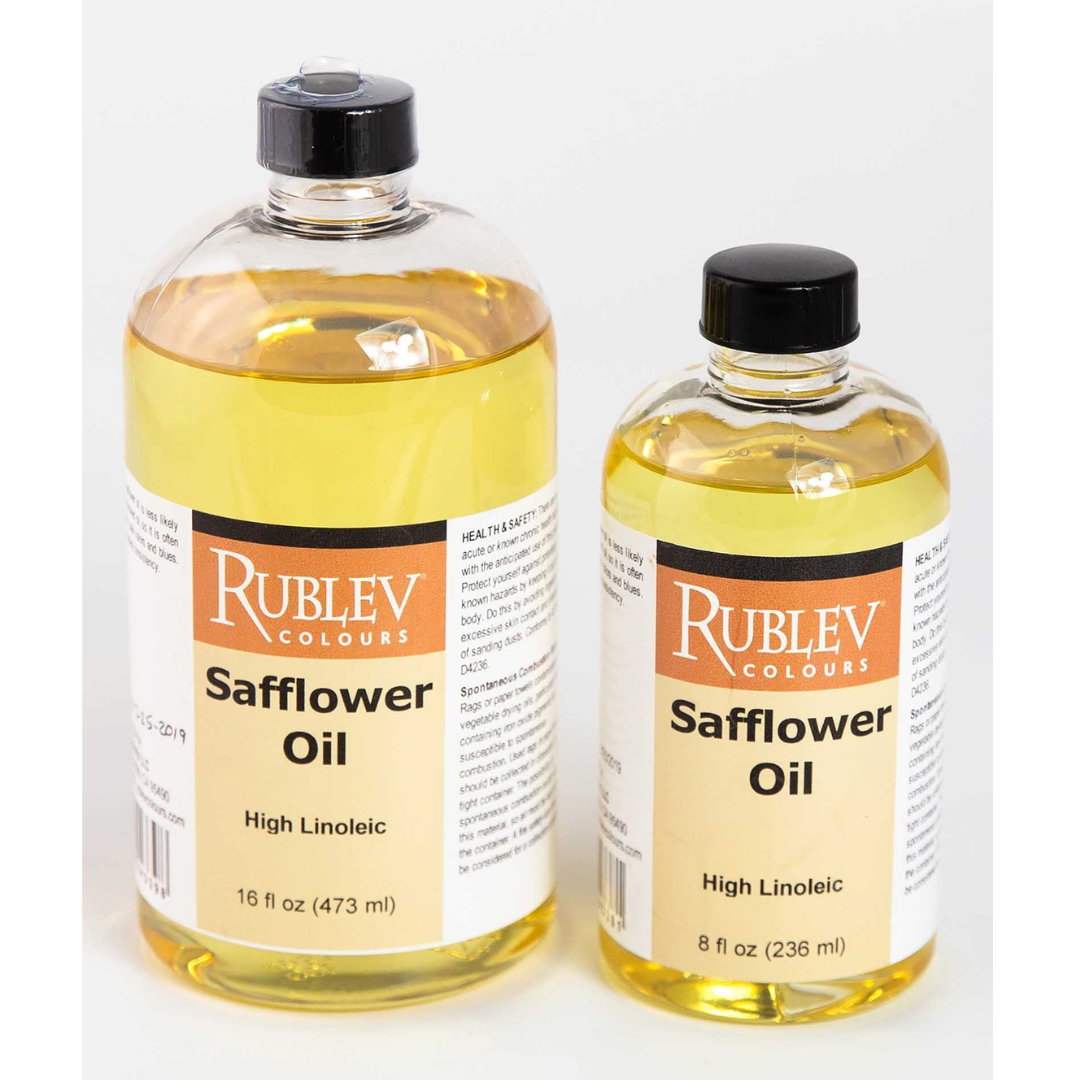
Safflower oil dries faster than poppy seed oil and gives oil color paste better texture.
The primary fatty acid of this safflower oil is linoleic acid (C18:2). The linoleic acid content of high-linoleic safflower oil is typically over 70%. After extracting the oil from the seed, the oil is refined resulting in a clear straw-colored oil with a bland odor.
Most artists' color manufacturers today substitute poppy seed oil or safflower oil for linseed oil in preparing certain pale oil colors and whites. Poppy seed, sunflower, and safflower oil can be safely used to make oil colors, such as light or pale colors, but they are not recommended for use as a painting media and should not be expected to replace linseed oil. These drying oils have little or no linolenic acid, a binder that gives a yellow tint to oil paint. The only binder in these oils is linoleic acid, which is not only less yellow but also yellows less over time. However, some consider that linoleic acid by itself is a weaker binder and should not be used as a replacement for linseed oil in all cases.
Safflower oil was introduced into painting in the mid-twentieth century and was unknown to earlier artists.
Add your review
Review Rublev Colours Safflower Oil